If you spend time texting, chatting on social media, or browsing online forums, you have probably seen a variety of internet slang and abbreviations. One of the lesser-known but occasionally used terms is KMSL.
Many people come across this abbreviation in messages or comments and immediately wonder what it means. Because internet slang evolves quickly, it can be confusing to keep up with new expressions and acronyms.
People often search for “KMSL meaning in text” when they see the term used in chats, memes, or social media posts and want to understand the tone behind it. Is it a joke?
A reaction? Or something more serious? Knowing the meaning can help avoid misunderstandings in conversations.
Definition & Meaning
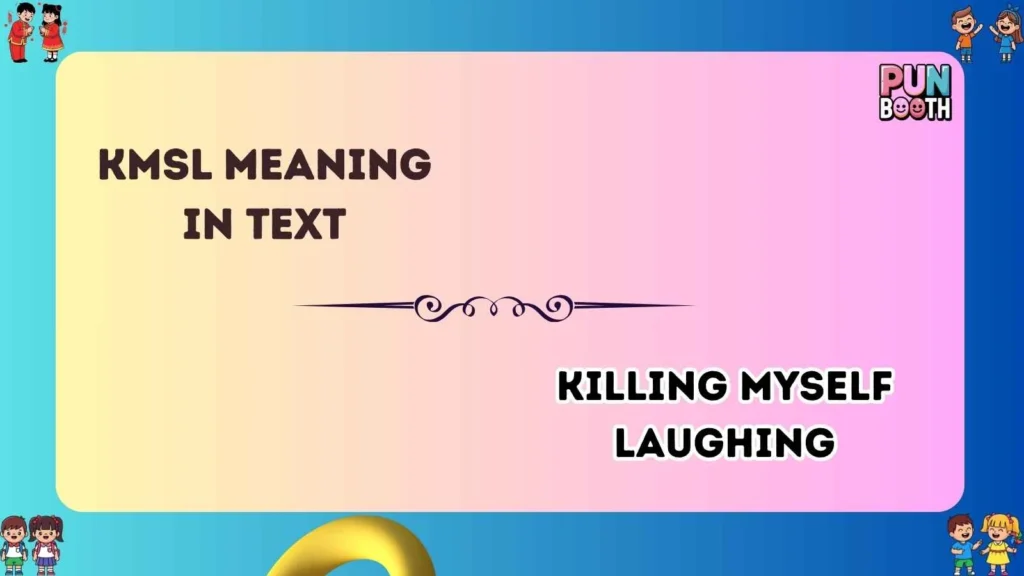
The abbreviation KMSL is commonly interpreted as “Killing Myself Laughing.” It is used in digital communication to express extreme laughter or amusement in response to something funny.
In texting language, people often shorten phrases to type faster and make conversations more casual. KMSL works similarly to other laughter-based abbreviations such as:
- LOL (Laughing Out Loud)
- LMAO (Laughing My Ass Off)
- ROFL (Rolling On the Floor Laughing)
However, KMSL usually implies a stronger reaction, meaning the person finds something incredibly funny. It exaggerates the idea of laughter in a dramatic way, which is common in internet humor.
For example:
- “That meme you sent me was hilarious, KMSL.”
- “Did you see what he just posted? KMSL!”
Despite the dramatic wording, the phrase is not meant literally. It is simply an expression used to show intense laughter or amusement.
Because the wording includes “killing myself,” some people may feel uncomfortable with the phrase. For this reason, many users prefer alternatives like LMAO or LOL in more sensitive environments.
Background & History
Internet slang developed alongside the rise of online communication platforms such as chat rooms, forums, and instant messaging services. As texting became faster and more informal, people started using abbreviations to communicate quickly.
The phrase “Killing Myself Laughing” existed in spoken language before the internet. People used it as a humorous exaggeration to express extreme laughter. When texting culture grew in the late 1990s and early 2000s, many of these phrases were shortened into acronyms.
KMSL likely emerged during this period when abbreviations like LOL, BRB, and OMG became popular. Online communities, particularly younger users, started experimenting with new slang variations to express reactions more dramatically.
Over time, different internet communities adopted different versions of laughter expressions. While LOL became the most widely used abbreviation, more expressive phrases like KMSL appeared in informal chats, memes, and humorous conversations.
However, because of the sensitive wording, the term never reached the same mainstream popularity as other laughter acronyms. It remains more niche and is often used casually among friends who understand the humorous context.
Usage in Various Contexts
The meaning of KMSL in text depends largely on the context of the conversation. Most commonly, it is used to respond to something funny, unexpected, or sarcastic.
1. Casual Text Conversations
Friends may use KMSL while chatting about jokes, funny stories, or memes.
Example:
“Did you see his dance video? KMSL!”
2. Social Media Comments
On platforms like Twitter, Instagram, or TikTok, users sometimes reply with KMSL to show they find a post extremely funny.
Example:
“That comment section is wild KMSL.”
3. Gaming Chats
In online gaming communities, players use quick abbreviations to react quickly during matches.
Example:
“You just fell off the map again? KMSL.”
4. Group Chats
In group chats, KMSL can express shared humor among friends reacting to something hilarious.
Example:
“I can’t believe he said that in class KMSL.”
In all these contexts, the tone is usually lighthearted and playful.
Common Misconceptions & Clarifications
There are a few misunderstandings about the phrase KMSL that can cause confusion.
Misconception 1: It means something serious or harmful.
In most cases, KMSL is simply exaggeration used for humor. The phrase is not meant literally.
Misconception 2: It is the same as “KMS.”
“KMS” stands for “Kill Myself” and can sometimes be used jokingly but may also appear in darker contexts. KMSL is specifically about laughing, making it less ambiguous.
Misconception 3: Everyone understands it.
Unlike popular abbreviations like LOL, many people may not recognize KMSL. This can lead to confusion if used with someone unfamiliar with internet slang.
Because of these misconceptions, it is important to consider the audience and context before using the term.
Similar Terms & Alternatives
If you want to express laughter in text, there are many alternatives that are more widely recognized.
Common options include:
LOL – Laughing Out Loud
LMAO – Laughing My Ass Off
ROFL – Rolling On the Floor Laughing
LMFAO – Laughing My Freaking Ass Off
Haha / Hahaha – Simple textual laughter
Dead – Modern slang meaning something is extremely funny
For example:
- “That joke was hilarious LOL.”
- “I’m watching that video again LMAO.”
These alternatives are often safer choices because they are universally understood and less likely to offend.
How to Respond to This Term
When someone sends KMSL in a message, they are usually reacting to something funny. Your response should match the tone of the conversation.
Here are some typical ways to reply:
1. Continue the Humor
If the conversation is joking, you can respond with another funny comment.
Example:
“Wait until you see the next video!”
2. Acknowledge the Reaction
You might simply respond with laughter or another reaction.
Example:
“Glad you liked it 😂”
3. Ask for Context
If you are unsure what the person is laughing about, you can ask politely.
Example:
“What part was the funniest?”
Responding naturally keeps the conversation engaging and friendly.
Regional or Cultural Differences
Internet slang can vary across countries and cultures. While many English abbreviations are widely used worldwide, some expressions are more common in specific communities.
In the United States and the United Kingdom, slang abbreviations like LOL and LMAO dominate online conversations. KMSL appears less frequently but is still recognizable among younger internet users.
In other regions, people may rely more on emojis or local slang instead of English acronyms. For example:
- Emojis such as 😂 or 🤣 are often used instead of text abbreviations.
- Some communities prefer simple “haha” or “hehe.”
Because of these differences, KMSL may not always be understood internationally.
Comparison with Similar Terms
Several internet abbreviations express laughter, but each has slightly different intensity levels.
LOL – Mild laughter or acknowledgment
LMAO – Strong laughter reaction
ROFL – Extremely funny situation
KMSL – Dramatic exaggeration of laughter
The main difference is tone and exaggeration. KMSL is more dramatic than LOL but not as widely accepted as other expressions.
Many people choose their preferred slang depending on the platform, audience, and personal style.
Usage in Online Communities & Dating Apps
Online communities and dating platforms often rely heavily on short, expressive reactions.
On social media platforms, KMSL may appear in:
- Meme responses
- Comment sections
- Reaction threads
In dating apps, users might send KMSL to show they appreciate someone’s humor.
Example:
“That pickup line was ridiculous KMSL.”
However, because dating apps involve communicating with strangers, people often prefer clearer expressions like LOL or emojis to avoid misunderstandings.
Hidden or Offensive Meanings
Although KMSL is usually harmless, the wording can sometimes raise concerns because it references self-harm indirectly.
Some users may feel uncomfortable seeing phrases that include “kill myself,” even when used jokingly. As awareness of mental health grows online, certain communities discourage using such expressions.
For this reason, people sometimes replace KMSL with safer alternatives like:
- “I’m dying laughing”
- “That’s hilarious”
- “LOL”
Being mindful of how language affects others can help maintain respectful conversations online.
Suitability for Professional Communication
KMSL is considered informal internet slang, which makes it inappropriate for professional or formal communication.
It should generally not be used in:
- Work emails
- Business chats
- Academic writing
- Professional networking platforms
Instead, professional environments typically use clearer language.
Example:
Instead of:
“KMSL at that presentation moment.”
Better option:
“That moment was unexpectedly funny.”
Maintaining professionalism helps avoid confusion and keeps communication respectful.
FAQs:
What does KMSL mean in text?
KMSL usually means “Killing Myself Laughing,” which expresses extreme laughter in online conversations.
Is KMSL the same as LOL?
No. LOL means “Laughing Out Loud,” while KMSL exaggerates laughter to show something is extremely funny.
Is KMSL offensive?
It can be sensitive because it references self-harm language, so some people avoid using it.
Where is KMSL commonly used?
It is mostly used in casual texting, memes, social media comments, and online chats.
Can KMSL be used in professional messages?
No. It is informal slang and should not be used in professional or formal communication.
What are safer alternatives to KMSL?
Common alternatives include LOL, LMAO, ROFL, haha, or laughing emojis.
Conclusion:
Understanding the KMSL meaning in text helps avoid confusion when encountering internet slang in messages or social media. The term stands for “Killing Myself Laughing,” a dramatic way to express extreme amusement.
Although it can be funny among friends, the phrase is less commonly used than other laughter abbreviations and may feel uncomfortable to some people because of its wording. In many situations, alternatives like LOL, LMAO, or emojis are more widely accepted.
As online language continues to evolve, new slang terms will keep appearing in digital conversations. Staying aware of their meanings ensures clearer communication and helps maintain respectful interactions in both casual and professional settings.

Hi, I’m Leo Anderson, the creator behind PunBooth, a space dedicated to exploring meanings, slang, text abbreviations, and the ever-evolving language of the internet.
At PunBooth, my goal is simple: to make complex words, confusing slang, and trending phrases easy to understand for everyone. Whether it’s a viral text abbreviation, a hood slang term, or a word you’ve seen online but didn’t quite get, I break it down into clear, simple, and human-friendly explanations.