In the fast-paced world of digital communication, abbreviations and shorthand dominate messaging platforms. One of the most frequently used, yet sometimes misunderstood, is simply “k”.
While it seems trivial, this single-letter response carries a surprising weight in tone, intent, and interpretation.
From texting friends to professional messages, many people search for “k meaning in text” to decode its subtleties. Why is a single letter so loaded?
Whether you’re a casual texter, an online gamer, or navigating dating apps, understanding “k” can prevent miscommunication and make your digital conversations smoother and more intentional.
Definition & Meaning
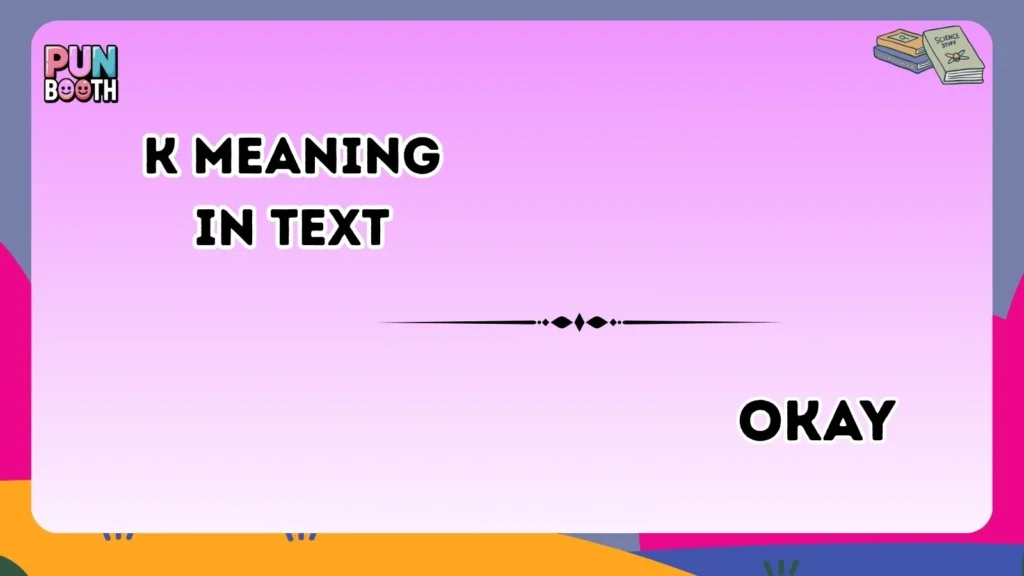
The term “k” in text messaging is the shorthand form of the word “okay”. It is widely used as a quick acknowledgment of a message without engaging in a full conversation. While its literal meaning is neutral, the tone it conveys can range from casual and friendly to abrupt or dismissive, depending on context and relationship dynamics.
For example:
- Friend: “Hey, I’ll pick you up at 7.”
- Reply: “k” → quick acknowledgment, may seem neutral or indifferent.
Essentially, “k” is a minimalist communication tool—efficient but emotionally ambiguous. Its brevity appeals to those who prioritize speed over detail in texting.
Background & History
The rise of “k” traces back to the early days of SMS texting and instant messaging. With character limits in the 1990s and early 2000s, texters favored abbreviations to save time and space. Words like “ok,” “u” (you), and “gr8” (great) became commonplace. Over time, “ok” was shortened further to “k”, reflecting a shift toward ultra-minimalist digital speech.
Interestingly, “k” also found its way into online forums and chatrooms, where brevity was valued over nuance. By the late 2000s, its usage was ubiquitous across platforms, from text messages to social media and gaming communities.
Usage in Various Contexts
The meaning of “k” often depends on context:
- Casual Chats: Often neutral acknowledgment, e.g., “I’ll meet you later.” → “k.”
- Group Chats: Quick response to multiple messages without overwhelming the conversation.
- Dating Apps: Can signal disinterest or passive-aggressiveness if overused.
- Professional Messages: Typically discouraged; may seem curt or unprofessional.
- Gaming Communities: Frequently used for rapid acknowledgment during fast-paced exchanges.
Tone and timing are critical. A single “k” can be read as friendly, indifferent, annoyed, or dismissive depending on who sends it and the surrounding conversation.
Common Misconceptions & Clarifications
Many users misinterpret “k” as inherently rude or dismissive. In reality:
- It often represents convenience rather than emotion.
- Context determines tone—friend-to-friend vs. professional communication can differ widely.
- Multiple “k”s (e.g., “kk” or “kkkk”) can signal friendliness, excitement, or sarcasm, depending on culture and platform.
Clarifying intent before assuming negativity is important to avoid unnecessary misunderstandings.
Similar Terms & Alternatives
If “k” seems too abrupt, other alternatives convey acknowledgment while softening tone:
- “ok” → neutral, slightly more polite.
- “okay” → formal and friendly.
- “alright” → casual and agreeable.
- “yep” / “yeah” → informal confirmation.
Choosing the right form depends on your relationship with the recipient and the platform being used.
How to Respond to This Term
When you receive “k”, your response depends on context:
- No Response Needed: Often used as acknowledgment, so no reply is necessary.
- Clarifying Intent: If the tone feels off, follow up politely, e.g., “Just checking, are we good?”
- Matching Tone: Respond with “k” or “ok” for consistency in fast-paced chats.
Awareness of tone ensures smoother communication and avoids potential misunderstandings.
Regional or Cultural Differences
Interpretation of “k” varies globally:
- In the US and UK, it can seem blunt if not balanced with emojis or context.
- In Latin America, multiple “k”s (e.g., “kkkkk”) indicate laughter, not annoyance.
- In Asian texting culture, single-letter responses are often seen as efficient, not rude.
Understanding these nuances prevents cross-cultural miscommunication.
Comparison with Similar Terms
Compared to other shorthand responses:
| Term | Tone | Usage |
|---|---|---|
| k | Neutral to curt | Quick acknowledgment |
| ok | Neutral | Polite acknowledgment |
| kk | Friendly | Informal confirmation |
| yep | Casual | Informal agreement |
| lol | Humorous | Express laughter |
“k” stands out for minimalism but requires careful tone reading.
Usage in Online Communities & Dating Apps
On platforms like Discord, WhatsApp, Tinder, or Bumble:
- Discord/Gaming: Used for fast acknowledgment during gameplay.
- Dating Apps: Can suggest disinterest if overused, as it appears non-committal.
- Social Media Comments: Often avoided in favor of emojis or more engaging responses.
In general, its brevity is ideal for rapid exchanges but not for building rapport.
Hidden or Offensive Meanings
Though “k” is typically benign, excessive or untimely usage can feel dismissive:
- One-word replies can convey passive-aggressiveness.
- Repetition like “k” followed by no further communication may suggest annoyance.
Awareness of these subtleties is important to maintain positive digital interactions.
Suitability for Professional Communication
In formal or work-related communication, “k” is often discouraged:
- It can appear curt, unprofessional, or inattentive.
- Preferred alternatives include “ok”, “noted”, or “understood”.
- Emojis or clarification can soften responses if brevity is necessary.
Maintaining tone and professionalism is crucial when deciding whether to use “k” in workplace messages.
What does K mean in hood slang
In hood slang, “K” often stands for “okay”, but its vibe can change depending on context. Sometimes it’s casual agreement, while other times it might carry a chill, nonchalant, or even slightly dismissive tone. It’s basically a quick way to respond without overcomplicating the convo.
K meaning in text from a girl
When a girl texts just “K,” it can mean she’s okay with what you said—but tone matters. A simple “K” might be neutral, bored, or even annoyed if the conversation was heated. Basically, it’s short, so it leaves a lot of room for interpretation.
What does k mean in text from a guy
When a guy sends “k” in a text, it usually means he acknowledges your message. Sometimes it’s casual, other times it can seem disinterested or lazy. Context is key—look at the rest of his messages to get the full vibe.
FAQs:
What does “k” mean in texting?
It is shorthand for “okay,” usually indicating acknowledgment.
Is “k” rude?
Not always; tone and context determine whether it seems blunt or neutral.
What does “kk” mean?
“kk” is friendlier, indicating informal agreement or acknowledgment.
Can “k” be used professionally?
It is generally discouraged; use “ok” or “understood” instead.
Why do people use “k” instead of “ok”?
It’s faster and saves typing time, especially in casual messaging.
How do I respond to “k”?
You can ignore it, match the brevity, or clarify if unsure about tone.
Conclusion:
Understanding the meaning and nuances of k in text messaging is essential for clear, respectful, and context-appropriate communication.
While it offers efficiency and speed, its brevity can sometimes lead to misunderstandings, especially across different cultures or professional settings.
Recognizing tone, choosing alternatives when necessary, and responding thoughtfully ensures that this small letter communicates exactly what you intend no more, no less.
Whether in casual chats, online communities, or professional messages, mastering the use of “k” can elevate your digital communication skills and prevent misinterpretation.

Leo Anderson is a passionate content creator and digital storyteller dedicated to bringing humor and positivity to a global audience. With a talent for crafting witty puns and light-hearted jokes, Leo focuses on producing engaging, family-friendly content that is both entertaining and shareable.