If you’ve ever received a message ending with “PS” and wondered what it means, you’re not alone. The abbreviation “PS” shows up everywhere texts, emails, social media captions, and even handwritten notes.
Despite its short length, it carries a meaningful purpose that can change the tone or add extra context to a message.
People search for “PS meaning in text” because it can feel confusing, especially in casual conversations where tone and intent matter. Is it something important? Is it an afterthought? Or just a stylistic choice?
Definition & Meaning
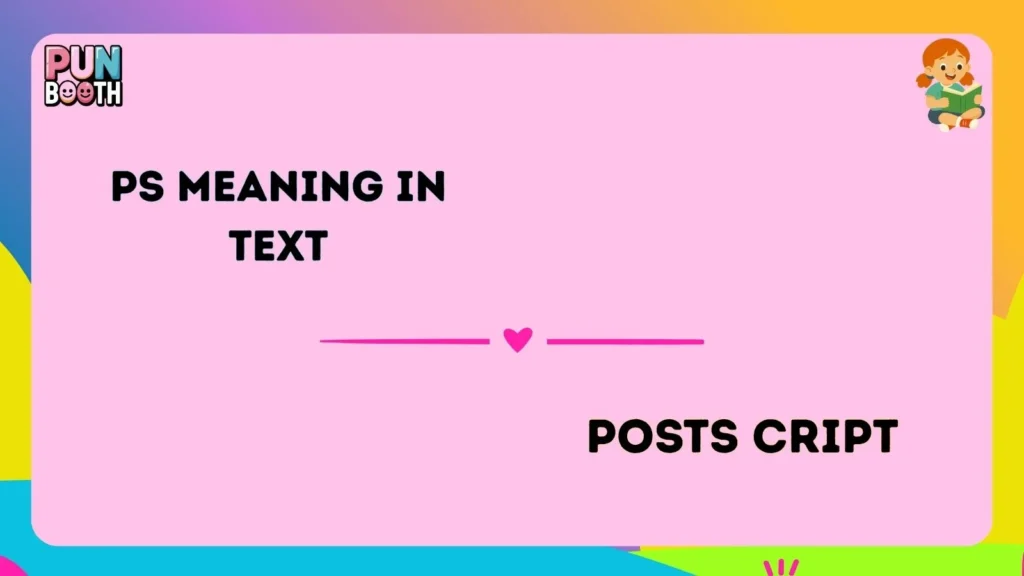
“PS” stands for postscript. In simple terms, it means “written after.” It is used to add an extra thought after the main message has already been completed.
In texting, PS is often used when someone remembers something they forgot to mention earlier or wants to add a final note. For example:
- “Don’t forget the meeting tomorrow. PS: Bring your notes.”
- “That movie was amazing. PS: The ending shocked me!”
The key idea is that PS introduces additional information. It doesn’t replace the main message—it enhances or supplements it.
In modern digital communication, PS can also be used playfully or stylistically. Sometimes it’s not even necessary, but people include it to emphasize a point or add a personal touch.
Background & History
The origin of PS dates back to handwritten letters, long before texting or emails existed. When people wrote letters with pen and paper, they couldn’t easily go back and edit what they had already written. So, if they forgot something, they added it at the end under “P.S.”
The term comes from the Latin phrase post scriptum, which literally means “written after.” Over time, it became widely accepted in English writing.
As communication evolved—from letters to emails and now instant messaging—the use of PS stayed relevant. Even though we can easily edit messages today, people still use PS out of habit or for stylistic effect.
Interestingly, PS has also expanded beyond its original purpose. In modern usage, it’s not always about forgetting something—it can also highlight an important or humorous final thought.
Usage in Various Contexts
PS is flexible and works in many different situations. In casual texting, it often adds a friendly or informal tone. For example:
- “See you later! PS: Don’t be late 😄”
In emails, PS can emphasize something important without rewriting the entire message:
- “Looking forward to your reply. PS: The deadline is Friday.”
On social media, PS is often used creatively:
- “Just finished my workout 💪 PS: I’m exhausted!”
It can also be used in storytelling or marketing to grab attention. A PS line often feels like a secret or bonus message, which makes it more engaging.
Overall, the tone of PS depends on the context. It can be serious, playful, or even persuasive.
Common Misconceptions & Clarifications
One common misconception is that PS always means something unimportant. In reality, it can highlight something very important—sometimes even more important than the main message.
Another misunderstanding is that PS is outdated. While it started in handwritten letters, it is still widely used in modern communication, including texts and emails.
Some people also think PS should only be used once. However, you might see variations like “PPS” (post-postscript) when someone adds multiple afterthoughts.
Lastly, PS is not limited to formal writing. It fits perfectly in casual conversations and digital chats.
Similar Terms & Alternatives
There are several alternatives to PS that people use depending on the situation. In texting, you might simply add another sentence instead of using PS.
Other similar expressions include:
- “By the way (BTW)”
- “Also”
- “One more thing”
Each of these serves a similar purpose—adding extra information—but they don’t carry the same stylistic feel as PS.
PS feels more intentional and slightly more structured, while alternatives are often more conversational.
How to Respond to This Term
Responding to a message with PS is simple. You don’t need to treat it differently from the rest of the message.
If the PS contains important information, respond directly to it:
- “Got it, I’ll bring my notes.”
If it’s playful or humorous, you can reply in a similar tone:
- “Haha, same here! That ending was wild.”
The key is to acknowledge the content, not the label “PS” itself. Treat it as part of the message rather than something separate.
Regional or Cultural Differences
PS is widely understood in English-speaking countries like the United States and the United Kingdom. However, its usage can vary slightly depending on cultural communication styles.
In more formal cultures, PS might appear mostly in emails or written communication. In casual digital cultures, it’s commonly used in texts and social media.
In non-English-speaking regions, people may still use PS because it has become globally recognized, especially online.
Comparison with Similar Terms
When compared to phrases like “BTW,” PS feels more structured and intentional. “BTW” is quick and conversational, while PS adds a slightly thoughtful or reflective tone.
For example:
- “BTW, bring snacks.” (casual)
- “PS: Bring snacks.” (slightly more deliberate)
Similarly, “also” is neutral and blends into the sentence, whereas PS stands out as a separate addition.
Usage in Online Communities & Dating Apps
In online communities and dating apps, PS is often used to add personality. It can make a message feel more engaging or memorable.
For example:
- “Had a great time chatting 😊 PS: You have a great sense of humor!”
It can also be used to add a compliment, joke, or extra detail without making the message too long.
Because tone matters a lot in online interactions, PS can help soften a message or make it feel more friendly.
Hidden or Offensive Meanings
PS itself does not have any offensive meaning. It is a neutral abbreviation with a clear purpose.
However, like any text element, the meaning depends on what follows it. A PS can contain anything—from a kind note to sarcasm or criticism.
So, while PS is harmless, always pay attention to the message that comes after it.
Suitability for Professional Communication
PS is acceptable in professional communication, especially in emails. It can be used to emphasize key points or add reminders.
However, it should be used carefully. In very formal documents, it might feel unnecessary or outdated.
In business emails, a PS can be effective for highlighting deadlines, reminders, or additional notes without cluttering the main message.
FAQs:
What does PS mean in text messages?
It means “postscript,” used to add extra information after the main message.
Is PS formal or informal?
It can be both, depending on how and where it’s used.
Can I use PS in casual chats?
Yes, it’s very common in casual texting and social media.
What is the difference between PS and BTW?
PS is more structured, while BTW is more conversational.
Can there be more than one PS?
Yes, people sometimes use PPS for additional notes.
Is PS outdated today?
No, it is still widely used in modern communication.
Conclusion:
Understanding PS meaning in text helps you communicate more clearly and confidently. Whether you’re sending a quick message, writing an email, or chatting online, PS is a simple yet powerful way to add extra thoughts without disrupting your main message.
Its long history from handwritten letters to digital chats—shows how adaptable and useful it is. Today, it remains a popular tool for adding emphasis, personality, or clarity.
By using PS thoughtfully, you can make your messages more engaging and complete without overcomplicating them.

Hi, I’m Leo Anderson, the creator behind PunBooth, a space dedicated to exploring meanings, slang, text abbreviations, and the ever-evolving language of the internet.
At PunBooth, my goal is simple: to make complex words, confusing slang, and trending phrases easy to understand for everyone. Whether it’s a viral text abbreviation, a hood slang term, or a word you’ve seen online but didn’t quite get, I break it down into clear, simple, and human-friendly explanations.