If you’ve spent any time chatting online, scrolling social media, or gaming with friends, you’ve probably come across short slang terms that can be confusing at first glance.
One such abbreviation is “KYS.” Many people search for its meaning because it can appear in casual conversations, memes, or even arguments sometimes in ways that feel unclear or concerning.
Understanding what “KYS” means is important because context changes everything. In some situations, it may be used jokingly among friends, while in others, it can come across as harsh or offensive. Without knowing the intent behind it, misunderstandings can easily happen.
Definition & Meaning
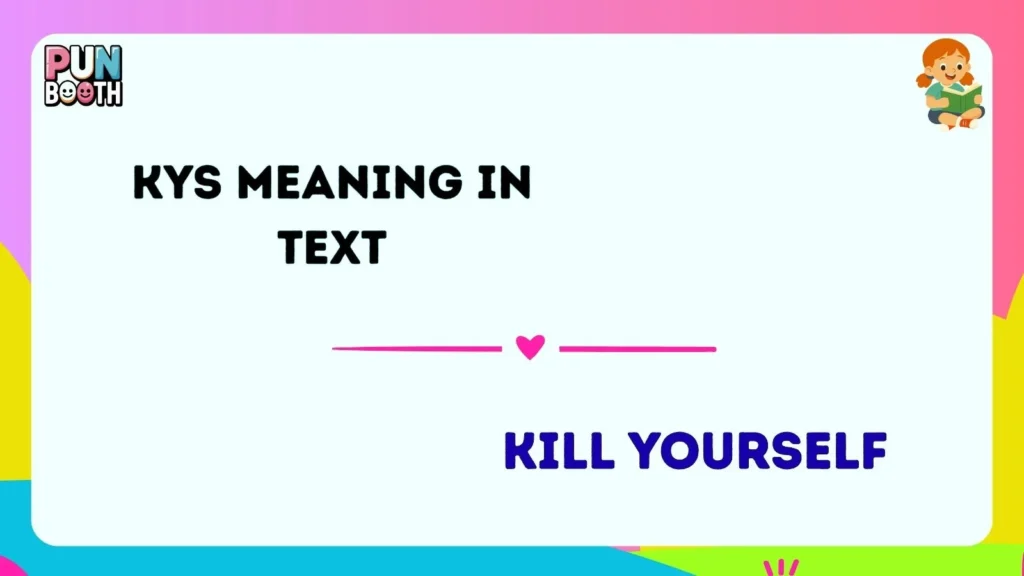
“KYS” is an internet slang abbreviation that most commonly stands for “Kill Yourself.” While this may sound extremely harsh—and it often is—it’s important to understand that its meaning depends heavily on context and tone.
In serious situations, “KYS” can be used as an insult or a harmful statement directed at someone, which is considered offensive and inappropriate. It can be especially damaging in online arguments or toxic environments where people use it to express anger or frustration.
However, in some informal settings—particularly among close friends or within certain gaming communities—it may be used jokingly or sarcastically. For example, someone might say “KYS 😂” after a friend makes a silly mistake in a game. Even then, the phrase remains risky because humor doesn’t always translate well in text.
Because of its potentially harmful meaning, many platforms discourage or ban its use. It’s widely recognized as a term that can cross boundaries quickly, even if the sender didn’t intend harm.
In short, “KYS” is a powerful abbreviation that should be understood carefully and used (or avoided) responsibly.
Background & History
The phrase behind “KYS” originated long before the internet, but its abbreviation form became popular with the rise of online chat rooms, forums, and multiplayer gaming in the early 2000s.
As communication shifted toward shorter, faster messages, users began creating acronyms to save time. Just like “LOL” (laugh out loud) or “BRB” (be right back), “KYS” emerged as a quick way to express strong emotions—usually frustration or mock aggression.
Gaming culture played a major role in spreading the term. Competitive environments often lead to heated reactions, and players started using short phrases like “KYS” during intense moments. Over time, it spread to platforms like Twitter, Reddit, and messaging apps.
However, as awareness of mental health grew, so did criticism of such language. Many users and platforms began recognizing that phrases like “KYS” could be harmful, even if used jokingly. This led to stricter moderation and more discussions about respectful communication online.
Today, “KYS” exists in a complicated space: widely recognized, sometimes used casually, but increasingly discouraged due to its negative implications.
Usage in Various Contexts
“KYS” can appear in different contexts, and understanding the situation is key to interpreting its meaning correctly.
1. Gaming Communities:
In online games, it’s sometimes used jokingly between teammates or friends after a mistake. However, in competitive matches, it can also be used aggressively toward opponents.
2. Social Media:
On platforms like Twitter or TikTok, “KYS” may appear in comments or memes. Sometimes it’s used sarcastically, but other times it can be part of toxic behavior.
3. Friend Groups:
Close friends may use it humorously, especially if they have an established understanding. Even then, it can be misunderstood by outsiders.
4. Arguments or Conflicts:
In heated discussions, “KYS” is often used as a direct insult, making it offensive and inappropriate.
Because tone is hard to read in text, the same phrase can feel funny to one person and hurtful to another. That’s why context—and your relationship with the person—matters so much.
Common Misconceptions & Clarifications
One major misconception is that “KYS” is always meant as a joke. While some people use it casually, this doesn’t make it harmless. Not everyone shares the same sense of humor, and what seems funny to one person may be deeply offensive to another.
Another misunderstanding is that it’s widely acceptable slang. In reality, many communities and platforms discourage its use due to its harsh meaning. Some even have rules against it.
People also assume that adding emojis softens the impact. For example, “KYS 😂” might seem playful, but it can still be interpreted negatively—especially by someone unfamiliar with the sender’s intent.
Lastly, some believe it’s just another harmless abbreviation like “LOL” or “OMG.” This is not true. Unlike those terms, “KYS” carries a serious and potentially harmful message at its core.
Understanding these misconceptions helps you use language more responsibly and avoid unnecessary misunderstandings.
Similar Terms & Alternatives
Instead of using “KYS,” many people prefer safer, more positive alternatives that don’t risk offending others.
Friendly teasing alternatives:
- “Bruh, what was that? 😂”
- “You messed up big time!”
- “That was hilarious!”
Expressing frustration without harm:
- “That was frustrating!”
- “I can’t believe that happened.”
Gaming slang alternatives:
- “GG” (Good Game)
- “Noob move” (still mild, but less extreme)
Using these alternatives keeps conversations fun and light without crossing boundaries. Language evolves, and choosing respectful expressions helps create a better online environment.
How to Respond to This Term
If someone sends you “KYS,” your response should depend on the context and your comfort level.
1. If it’s clearly a joke:
You can respond playfully, especially if it’s from a close friend. For example:
“Wow, rude 😂” or “I’ll remember that!”
2. If it feels offensive:
Set boundaries calmly. You could say:
“Hey, I don’t like that kind of joke.”
3. If it’s from a stranger or in a toxic setting:
It’s often best to ignore, mute, or block the person. Engaging may escalate the situation.
4. If it feels serious or concerning:
Take it seriously and consider reporting the message, especially on moderated platforms.
Your comfort and safety matter most. You’re never obligated to accept language that makes you uncomfortable.
Regional or Cultural Differences
The interpretation of “KYS” can vary depending on culture and region. In some online communities, especially among younger users, it may be normalized as part of casual slang. In others, it is considered highly inappropriate and unacceptable.
In Western online culture, awareness around mental health has made people more cautious about using such terms. In contrast, in some regions where internet slang is still evolving, users may not fully understand the seriousness behind it.
Language barriers also play a role. Non-native English speakers might use or encounter “KYS” without realizing its full meaning, leading to accidental misuse.
Because of these differences, it’s always safer to avoid using terms that can be misinterpreted across cultures.
Comparison with Similar Terms
“KYS” is often compared to other slang terms that express frustration or humor, but it stands out due to its intensity.
- “LOL” or “LMAO” – purely humorous, no negative meaning
- “Noob” – mild insult, but generally accepted in gaming
- “Get lost” – dismissive, but less harsh
- “KYS” – extreme, potentially offensive
Unlike other slang, “KYS” carries a strong emotional weight, which makes it riskier to use.
Usage in Online Communities & Dating Apps
In online communities like forums, gaming chats, and social media platforms, “KYS” appears more frequently in informal or anonymous interactions. Anonymity can encourage people to use harsher language than they would in real life.
On dating apps, however, the use of “KYS” is extremely rare and generally seen as unacceptable. It can immediately create a negative impression and may even lead to being reported or blocked.
Most platforms today promote respectful communication, so using such terms can harm your online reputation.
Hidden or Offensive Meanings
While “KYS” has a straightforward meaning, its impact goes beyond the literal words. It can be seen as promoting harmful ideas or encouraging negativity, even when used jokingly.
Because of this, it is often flagged as offensive content. Many people associate it with toxic behavior, cyberbullying, or online harassment.
Understanding this deeper implication is important. Even if the sender doesn’t intend harm, the phrase can still carry a heavy emotional impact.
Suitability for Professional Communication
“KYS” is completely unsuitable for professional communication. It should never be used in emails, workplace chats, or any formal setting.
Professional environments require respectful and clear communication. Using slang like “KYS” can damage your reputation, create conflict, and even lead to disciplinary action.
If you’re unsure whether a term is appropriate, it’s always safer to choose clear and respectful language.
FAQs:
What does KYS mean in text?
It usually stands for “Kill Yourself,” though meaning depends on context.
Is KYS always offensive?
Not always, but it is risky and often considered inappropriate.
Can KYS be used as a joke?
Some people use it jokingly, but it can still be misunderstood.
What should I do if someone says KYS to me?
Respond calmly, set boundaries, or ignore/block if needed.
Is KYS allowed on social media?
Many platforms discourage or restrict its use.
Should I use KYS in conversations?
It’s best to avoid it and use safer alternatives.
Conclusion:
“KYS” is a widely recognized internet slang term with a strong and potentially harmful meaning. While it may sometimes appear in jokes or casual conversations, it carries risks that make it easy to misunderstand or offend others.
As online communication continues to evolve, choosing respectful and clear language becomes more important than ever.
By understanding the meaning, context, and impact of such terms, you can communicate more effectively and create a positive digital environment.

Hi, I’m Leo Anderson, the creator behind PunBooth, a space dedicated to exploring meanings, slang, text abbreviations, and the ever-evolving language of the internet.
At PunBooth, my goal is simple: to make complex words, confusing slang, and trending phrases easy to understand for everyone. Whether it’s a viral text abbreviation, a hood slang term, or a word you’ve seen online but didn’t quite get, I break it down into clear, simple, and human-friendly explanations.