In today’s fast-moving digital world, short text abbreviations have become a core part of everyday communication. One such term that often confuses people is “AII” in text. You might have seen it in chats, social media comments, or casual messages and wondered what it actually means.
People search for this term because it doesn’t have a single fixed definition. Its meaning can change depending on context, tone, and even the person using it. That’s exactly why understanding it properly is important—especially if you don’t want to misinterpret a message or respond awkwardly.
This guide breaks down everything you need to know about “AII” in a simple and engaging way. From its meaning and origin to how it’s used in conversations, you’ll get a complete understanding so you can confidently use or respond to it.
Definition & Meaning
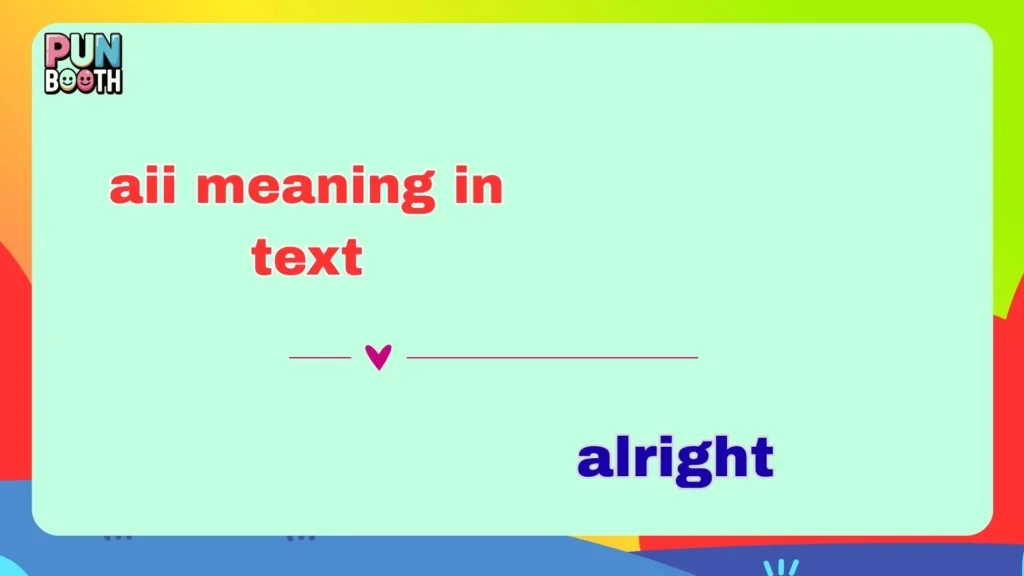
“AII” in text is commonly used as a casual slang variation of the word “alright” or “okay.” It’s often typed quickly in informal conversations, especially in texting or social media chats.
Depending on context, it can carry slightly different meanings:
- Agreement: “AII, I’ll do it.”
- Acknowledgment: “AII, got it.”
- Casual response: “AII cool.”
Sometimes, it can also express a relaxed or indifferent tone. For example, replying with just “AII” might suggest the person is okay with something but not overly excited.
In rare cases, “AII” could be interpreted as a stylized version of “all” (as in “aii good”), but this usage is less common.
Overall, “AII” is informal, flexible, and tone-dependent—making it important to read the surrounding conversation carefully.
Background & History
The term “AII” doesn’t come from formal language rules. Instead, it evolved naturally through internet slang and texting culture.
As mobile messaging grew, people began shortening words to type faster. “Alright” became:
- “aight”
- “aiight”
- and eventually “AII”
This transformation reflects how spoken language influences text. In casual speech, “alright” is often pronounced more like “aight,” which then gets simplified further in writing.
“AII” is especially popular among younger users and in online communities where speed and brevity matter. It also reflects a broader trend of phonetic spelling—writing words the way they sound rather than how they’re traditionally spelled.
Usage in Various Contexts
“AII” can appear in many types of conversations, each with a slightly different tone:
1. Casual Conversations
Used between friends:
- “AII, see you later.”
- “AII bro, take care.”
2. Social Media
Common in comments or replies:
- “AII that’s funny 😂”
- “AII I agree with this”
3. Text Messaging
Quick acknowledgment:
- “AII I’ll call you”
- “AII thanks”
4. Group Chats
Used to keep things moving:
- “AII let’s go”
- “AII everyone ready?”
In all these contexts, it helps keep communication quick, relaxed, and informal.
Common Misconceptions & Clarifications
Many people misunderstand “AII” because it’s not standardized. Here are some clarifications:
- ❌ It does NOT mean “Artificial Intelligence Interface” in casual texting.
- ❌ It is NOT a formal abbreviation.
- ✅ It usually means “alright” or “okay.”
- ✅ Tone depends on context.
Another misconception is that it’s rude. While it can seem short or blunt, it’s usually just casual—not disrespectful.
Similar Terms & Alternatives
There are many slang alternatives similar to “AII,” including:
- Aight / Aiight – More common spelling of the same word
- OK / Okay – Standard version
- K – Very short, sometimes cold reply
- Bet – Agreement or confirmation
- Cool – Casual acceptance
Each of these carries a slightly different tone, so choosing the right one depends on how you want to sound.
How to Respond to This Term
Responding to “AII” is simple and depends on context:
- If it shows agreement → continue conversation
- If it ends the chat → no reply needed
- If tone feels unclear → ask for clarification
Examples:
- “AII 👍” → You can say “Great!”
- “AII I’ll come” → Reply “Perfect, see you!”
- Just “AII” → Could be the end of the conversation
Regional or Cultural Differences
“AII” is more common in informal English-speaking communities, especially in:
- Urban slang
- Youth texting culture
- Online gaming and social media spaces
In some regions, similar variations like “aight” are more popular. The exact spelling may change, but the meaning usually stays close to “alright.”
Comparison with Similar Terms
Let’s compare “AII” with other similar expressions:
- AII vs OK
“OK” is neutral and universal, while “AII” is casual and slang-based. - AII vs K
“K” can feel cold or dismissive, while “AII” feels more relaxed. - AII vs Cool
“Cool” sounds more positive, while “AII” is more neutral.
Understanding these differences helps you choose the right tone in conversations.
Usage in Online Communities & Dating Apps
In online communities and dating apps, “AII” is often used to:
- Keep chats casual
- Avoid sounding too formal
- Respond quickly
However, tone matters a lot in these spaces. A simple “AII” might:
- Show interest (if followed by more text)
- Seem uninterested (if used alone repeatedly)
So, context and frequency matter when using it in conversations that require emotional clarity.
Hidden or Offensive Meanings
Generally, “AII” does not have offensive meanings. However:
- It can seem dismissive if used alone
- It may feel uninterested in serious conversations
So while not offensive, it can be misinterpreted depending on tone.
Suitability for Professional Communication
“AII” is not suitable for professional communication.
Avoid using it in:
- Emails
- Work chats
- Formal messages
Instead, use:
- “Alright”
- “Okay”
- “Understood”
Professional settings require clarity and proper language.
FAQs:
What does AII mean in texting?
It usually means “alright” or “okay” in a casual tone.
Is AII rude or disrespectful?
No, but it can feel blunt depending on context.
Can I use AII in formal messages?
No, it’s best to avoid it in professional communication.
Is AII the same as aight?
Yes, it’s a shorter variation of “aight,” both meaning “alright.”
Why do people use AII instead of okay?
It’s faster to type and feels more casual.
Does AII have multiple meanings?
Mostly no—it mainly means “alright,” but tone can vary.
Conclusion:
“AII” is a simple yet versatile slang term that reflects how language evolves in digital communication. While it mainly means “alright” or “okay,” its tone can shift depending on context, making it important to understand how and when it’s used.
It’s perfect for casual chats, social media, and quick replies, but not suitable for formal or professional settings.
By understanding its meaning, variations, and usage, you can communicate more effectively and avoid confusion in conversations.

Hi! I’m Ethan Walker, the creator behind PunBooth, a place where words come to life and meanings finally make sense.
I’ve always been fascinated by how language keeps evolving, especially in the digital world. From trending slang to mysterious text abbreviations, I enjoy breaking things down into simple, clear explanations that anyone can understand. That curiosity is what inspired me to create PunBooth, a space where confusion turns into clarity.