If you’ve ever received a message saying “wyg?” and paused for a second, you’re not alone. Texting slang evolves quickly, and abbreviations like this can feel confusing if you’re not constantly online. “WYG” is one of those short, casual expressions commonly used in digital conversations, especially in chats, social media, and dating apps.
People search for this term because they want to understand what someone is asking—or implying—when they use it. Misinterpreting slang can lead to awkward replies or missed cues, particularly in informal conversations where tone and context matter.
Understanding what “wyg” means, how it’s used, and when to respond appropriately can help you communicate more confidently online. Whether you’re chatting with friends, meeting someone new, or just trying to stay updated with modern texting language,
Definition & Meaning
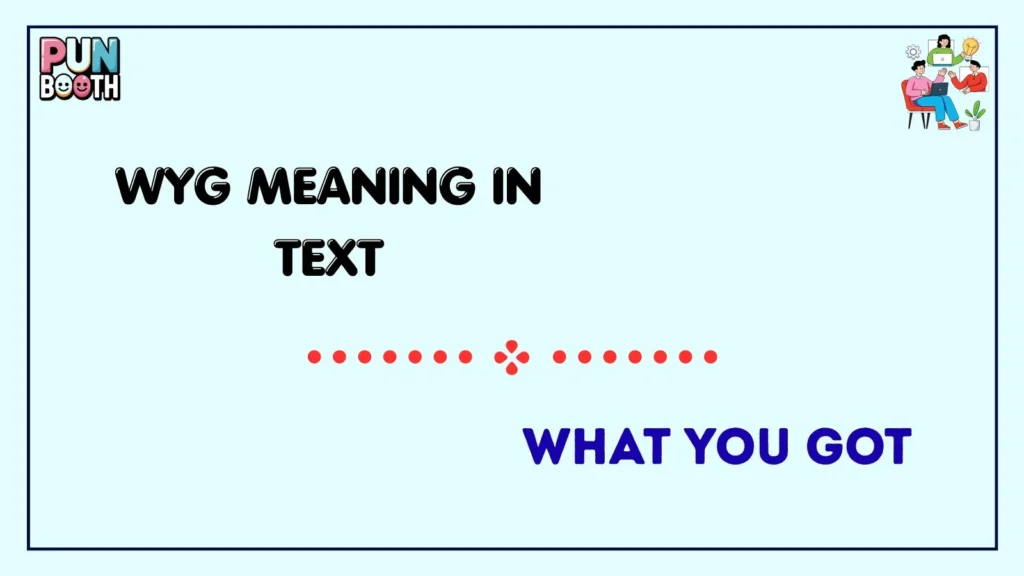
“WYG” typically stands for “What You Got?” in text messaging. It’s a casual and informal way of asking someone what they’re doing, what they have going on, or what they can offer in a given situation.
The meaning of “wyg” can slightly shift depending on the context of the conversation. For example:
- In a casual chat, it may mean: “What are you up to?”
- In a planning situation: “What do you have available?”
- In a social or dating context: “What are you offering or bringing?”
It’s important to note that “wyg” is not a formal abbreviation and is mostly used in relaxed, conversational environments. The tone behind it can vary—sometimes it’s friendly and curious, while other times it may come off as direct or even slightly blunt.
Because it’s short and lacks detail, context plays a huge role in understanding its exact meaning. For instance, if someone texts “wyg tonight?”, they’re likely asking about your plans. On the other hand, “wyg?” in a different setting might be more open-ended.
Overall, “wyg” is a quick way to keep conversations flowing without typing out full sentences.
Background & History
The abbreviation “wyg” comes from the broader culture of internet slang and SMS shorthand, which became popular in the early 2000s. As texting grew and character limits were tighter, users began shortening phrases to save time and space.
Like many slang terms, “wyg” didn’t originate from a single source. Instead, it gradually developed through everyday use in messaging platforms, online forums, and social media apps. Over time, it became more common in casual communication, particularly among younger users who prefer quick, efficient ways to chat.
The rise of messaging apps like WhatsApp, Snapchat, and Instagram accelerated the use of such abbreviations. People began favoring speed over formality, leading to widespread adoption of shorthand expressions like “wyg,” “wyd” (what you doing), and “wya” (where you at).
Interestingly, “wyg” is less universally recognized compared to some other abbreviations. This makes it feel more niche or context-specific. It’s often used within certain social circles rather than being globally standardized.
Today, “wyg” continues to evolve, with its meaning slightly adapting depending on trends, platforms, and user behavior.
Usage in Various Contexts
“WYG” can be used in multiple situations, and its meaning depends heavily on the conversation context.
Casual Conversations
Among friends, “wyg” is often used as a relaxed way to check in. For example:
- “Hey, wyg?” → Asking what someone is doing
Planning & Coordination
When making plans, it can refer to availability or options:
- “Wyg for tonight?” → Asking about plans or availability
Social & Dating Contexts
In dating apps or flirty conversations, it may carry a slightly different tone:
- “Wyg?” → Could imply interest in what someone is offering emotionally, socially, or even physically
Group Chats
In group settings, it might be used to gather ideas or contributions:
- “Wyg for the party?” → Asking what someone is bringing
Because it’s informal, “wyg” is best suited for friendly, relaxed interactions rather than serious discussions. The key to using it effectively is understanding your audience and the tone of the conversation.
Common Misconceptions & Clarifications
One common misconception is that “wyg” has a fixed meaning. In reality, it’s flexible and context-dependent. People often assume it always means “What are you doing?”—but that’s actually closer to “wyd.”
Another misunderstanding is that “wyg” is universally recognized. It’s not as widely known as other abbreviations, so some people may not understand it at all. This can lead to confusion or miscommunication.
Some users also interpret “wyg” as rude or too direct. Since it lacks politeness markers like “please” or “hey,” it can feel abrupt depending on how it’s used. Adding a friendly tone or emoji can help soften it.
Lastly, it’s sometimes mistaken for having inappropriate or hidden meanings. While it can take on suggestive tones in certain contexts, it is not inherently offensive. The intent behind the message matters more than the abbreviation itself.
Understanding these nuances helps avoid awkward misunderstandings and ensures smoother communication.
Similar Terms & Alternatives
There are several similar abbreviations that people often use instead of or alongside “wyg.” These include:
- WYD – What You Doing
- WYA – Where You At
- SUP / WSP – What’s Up
- HMU – Hit Me Up
Each of these has a slightly different tone and purpose. For example, “wyd” focuses on actions, while “wyg” can be broader and more open-ended.
Using alternatives can sometimes be clearer, especially if you’re unsure whether the other person understands “wyg.” For example:
- Instead of “wyg?” → “What are you up to?”
- Instead of “wyg tonight?” → “Any plans tonight?”
Choosing the right phrase depends on how clear, formal, or friendly you want to be.
How to Respond to This Term
Responding to “wyg” depends on the context and your relationship with the sender.
Simple Responses
- “Not much, just chilling.”
- “Working right now.”
Engaging Responses
- “Not much, what about you?”
- “Thinking of going out—any ideas?”
Clarifying Responses
If you’re unsure what they mean:
- “Do you mean what I’m doing?”
- “What exactly are you asking?”
Flirty or Casual Replies
- “Depends, what are you looking for?”
- “Maybe something fun 😉”
The key is to match the tone of the conversation. If it feels casual, keep it light. If it feels unclear, don’t hesitate to ask for clarification.
Regional or Cultural Differences
“WYG” is more common in English-speaking digital communities, particularly in the U.S. and among younger users. However, it may not be widely understood in all regions.
In countries where English is a second language, users may prefer clearer phrases instead of abbreviations. For example, instead of “wyg,” they might use full sentences to avoid confusion.
Cultural tone also matters. In some cultures, direct phrases like “wyg?” may seem too blunt, while in others, it’s perfectly normal.
Understanding your audience helps ensure your message is received positively.
Comparison with Similar Terms
“WYG” is often compared with “WYD,” but they’re not identical.
- WYG (What You Got?) → Broader, can mean plans, options, or offerings
- WYD (What You Doing?) → Specifically asks about current activity
Similarly:
- WYA focuses on location
- SUP is more general and conversational
While these terms overlap, choosing the right one depends on what you want to ask. “WYG” is slightly more flexible but also more ambiguous.
Usage in Online Communities & Dating Apps (250–500 words)
In online communities, “wyg” is often used to keep conversations short and casual. It’s common in chat threads where quick responses are expected.
On dating apps, the tone can shift slightly. Here, “wyg” might be used as a conversation starter or a way to gauge interest. However, it can sometimes feel too vague or low-effort, especially if not followed by a more engaging message.
For better communication, many users prefer combining it with additional context, such as:
- “Hey, wyg tonight?”
- “Wyg this weekend?”
This makes the message clearer and more inviting.
Hidden or Offensive Meanings
“WYG” itself is not inherently offensive. However, like many abbreviations, its meaning can shift based on tone and context.
In some cases—especially in dating or informal chats—it may carry a slightly suggestive tone. For example, someone might use it to imply interest in what the other person is offering socially or romantically.
That said, it does not have a fixed inappropriate meaning. Most of the time, it’s harmless and simply used for casual conversation.
If a message feels uncomfortable, it’s always okay to ask for clarification or set boundaries.
Suitability for Professional Communication
“WYG” is not suitable for professional or formal communication. In work emails, business chats, or academic settings, using full sentences is always the better choice.
For example:
- Instead of “wyg for the meeting?”
- Use: “What are your updates for the meeting?”
Professional communication requires clarity, politeness, and structure—qualities that abbreviations like “wyg” do not provide.
Using proper language helps maintain credibility and ensures your message is taken seriously.
FAQs:
What does wyg mean in texting?
It usually means “What You Got?” and asks about plans, actions, or availability.
Is wyg the same as wyd?
No, “wyd” asks what someone is doing, while “wyg” is broader.
Is wyg rude?
Not necessarily, but it can feel blunt depending on tone.
Can wyg have a flirty meaning?
Yes, in some contexts it can sound playful or suggestive.
Should I use wyg in formal messages?
No, it’s best for casual conversations only.
What is the best reply to wyg?
Answer based on context, like “Not much, you?” or clarify if unsure.
Conclusion:
“WYG” is a simple yet flexible texting abbreviation that fits perfectly into casual digital conversations. While it commonly means “What You Got?”, its exact meaning depends on context, tone, and relationship between users.
Understanding how and when to use it can help you avoid confusion and communicate more effectively.
Although it’s useful in informal chats, it’s not appropriate for professional settings. Like most internet slang, clarity and context are key.
When in doubt, asking for clarification or using a more direct phrase can always help keep conversations smooth and engaging.

Hi! I’m Ethan Walker, the creator behind PunBooth, a place where words come to life and meanings finally make sense.
I’ve always been fascinated by how language keeps evolving, especially in the digital world. From trending slang to mysterious text abbreviations, I enjoy breaking things down into simple, clear explanations that anyone can understand. That curiosity is what inspired me to create PunBooth, a space where confusion turns into clarity.