Language on the internet evolves quickly, and slang terms often become popular before many people fully understand them.
One such term that frequently appears on social media, in music lyrics, texting, and online conversations is “opp.” Many people search for the opp meaning because they encounter it on platforms like TikTok, Instagram, Twitter, or in rap culture and want to understand what it actually means.
In simple terms, “opp” usually refers to an opponent, enemy, rival, or someone who is against you. However, depending on the situation, the meaning can slightly change. For example, it may refer to a personal rival, a competing group, or someone disliked within a social circle.
The word has gained popularity through hip-hop culture and internet slang, which helped it spread globally. Today, people use it in memes, casual conversations, and even jokingly among friends.
Definition & Meaning
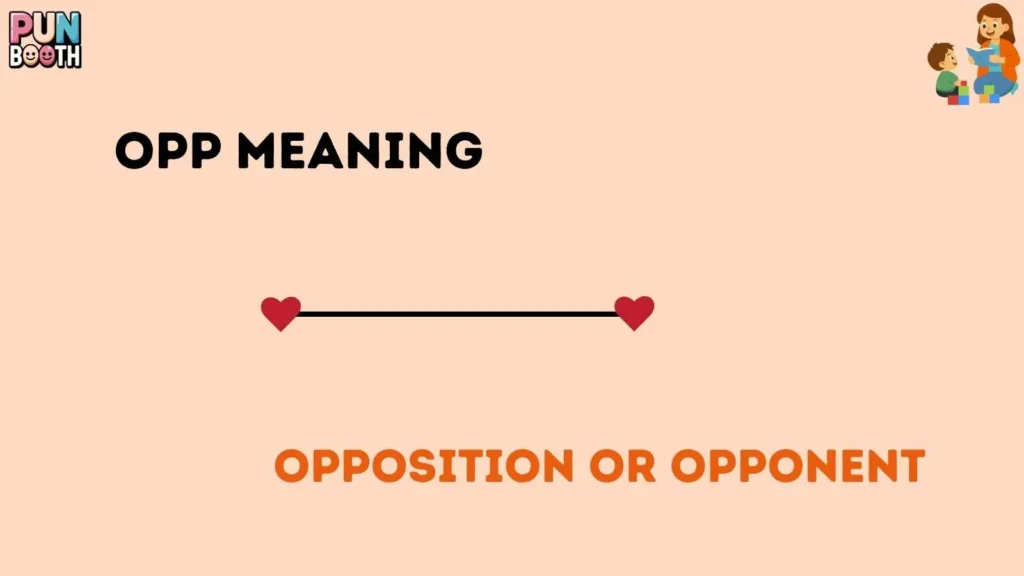
The term “opp” is a slang abbreviation of the word “opposition” or “opponent.” It is used to describe someone who is against you, competing with you, or considered an enemy or rival.
In modern slang, calling someone an “opp” usually means they are not on your side. This could refer to a rival group, a person who dislikes you, or someone working against your goals.
For example:
- “Stay away from him, he’s an opp.”
- “They’re not our friends, they’re opps.”
In everyday online conversations, the word may also be used humorously. Sometimes people jokingly refer to a friend who disagrees with them as an “opp,” even if there is no real conflict.
The word can also have slightly different meanings depending on context:
1. Personal Rival
Someone who competes with you socially or professionally.
2. Enemy or Opponent
A person or group that is against you or your team.
3. Someone Disliked
In casual conversations, it may simply mean someone you don’t like.
Because slang evolves quickly, the meaning of “opp” can shift depending on the community using it. However, the core idea usually remains the same: someone who stands on the opposite side of you.
Background & History
The slang term “opp” became popular largely through hip-hop and street culture in the United States. It emerged from the shortened form of “opposition.” Over time, the word was adopted in rap lyrics to refer to rival groups or enemies.
In many rap songs, artists use “opps” to describe people who are against them, particularly in the context of neighborhood rivalries or competition between groups. Because hip-hop music has a huge global influence, many slang terms from this culture quickly spread worldwide.
Social media then accelerated the spread of the word. Platforms like:
- TikTok
- Twitter (X)
- Snapchat
helped introduce the term to millions of users who began using it casually in memes and comments.
Another factor in the rise of the word is internet shorthand culture. Online communication often favors short, quick expressions. “Opp” is easier and faster to type than “opponent” or “enemy,” which makes it appealing in texting and social media.
Today, the term is used far beyond its original environment. Teenagers, gamers, meme creators, and online communities now use it regularly—even in contexts where the original street meaning is softened or humorous.
Usage in Various Contexts
The meaning of “opp” can change slightly depending on where and how it is used. Understanding these contexts helps clarify what someone means when they use the word.
1. Social Media
On social platforms, “opp” is often used casually or jokingly.
Example:
- “Anyone who hates pizza is my opp.”
Here, it simply means someone who disagrees with the speaker.
2. Music and Pop Culture
In rap and hip-hop culture, “opps” often refers to real rivals or enemies. Lyrics sometimes mention “watching out for opps” or “avoiding opps,” which refers to staying alert for people who might cause problems.
3. Gaming Communities
Gamers sometimes use “opp” to describe their opponent in a match.
Example:
- “My opp was really strong in that game.”
4. School or Social Groups
Among teenagers, the word can describe someone from a rival group or someone who dislikes them.
5. Memes and Humor
Many internet users now use “opp” jokingly. Someone who supports a different sports team or favorite movie character might be called an “opp” as a playful insult.
Because of these different contexts, it’s important to look at the tone and situation to understand exactly how the word is being used.
Common Misconceptions & Clarifications
Because slang spreads quickly online, misunderstandings about words like “opp” are common. Several misconceptions appear frequently when people first encounter the term.
Misconception 1: It always means a dangerous enemy
While the word can refer to serious rivals, most online usage is casual or humorous.
Misconception 2: It only belongs to gang culture
Although it originated in street slang, today it is widely used by internet users who have no connection to that culture.
Misconception 3: It always refers to a person
Sometimes people use “opp” to describe anything opposing them, such as an idea or opinion.
Misconception 4: It is always offensive
The word can sound aggressive, but in many conversations it is used playfully.
Understanding these clarifications helps people interpret the word correctly and avoid assuming the worst when they see it online.
Similar Terms & Alternatives
Several other slang and everyday words carry similar meanings to “opp.” These alternatives may be used depending on context and tone.
Common alternatives include:
- Enemy – A direct adversary
- Opponent – Someone competing against you
- Rival – A competitor
- Hater – Someone who dislikes or criticizes you
- Competitor – Often used in sports or business
In internet slang, people might also use expressions like:
- “They’re against me.”
- “That’s my rival.”
- “That’s my competition.”
While these words share similarities, “opp” tends to sound more informal and slang-based than the others.
How to Respond to This Term
If someone calls you an “opp,” how you respond depends on the context.
If It’s a Joke
Many people use the word humorously among friends. In this case, a playful response is usually appropriate.
Example:
- “Guess I’m your opp today.”
If It’s Friendly Rivalry
In games or competitions, the term may simply mean opponent.
Example:
- “Good game, opp!”
If It Sounds Negative
If someone uses the term aggressively, it may signal conflict. The best approach is usually to stay calm and avoid escalating the situation.
Understanding tone and context helps determine whether the comment is serious or just playful slang.
Regional or Cultural Differences
Although the word “opp” started in American slang, its meaning has spread internationally. However, the way people use it can vary by region.
In North America, the term is closely connected to hip-hop culture and internet slang.
In Europe and the UK, it appears mainly on social media and among younger audiences influenced by online culture.
In Asia and other global regions, the term is usually learned through TikTok, memes, or music rather than local slang traditions.
Because internet culture spreads rapidly, many slang terms like “opp” become global expressions, even if their origins are tied to a specific cultural context.
Comparison with Similar Terms
Although “opp” is similar to words like “enemy” or “rival,” there are subtle differences.
Enemy
A strong, serious word implying hostility or conflict.
Rival
Usually describes competition, such as in sports or business.
Opponent
A neutral word often used in debates, games, or competitions.
Opp
A casual slang term that can range from serious rivalry to playful teasing.
Because of this flexibility, “opp” often feels less formal and more connected to online culture.
Usage in Online Communities & Dating Apps
Online communities frequently adopt slang words quickly, and “opp” is no exception.
In gaming communities, the word can simply mean an opponent in a match.
In social media comments, users might jokingly label someone an “opp” if they disagree with an opinion.
On dating apps, the term occasionally appears humorously in profiles or conversations. Someone might jokingly write something like:
“Anyone who dislikes coffee is automatically my opp.”
In this context, the word is not meant seriously but rather as a playful way to express preferences.
Hidden or Offensive Meanings
Although the word is often harmless online, it can have stronger meanings in certain communities.
In some situations, calling someone an “opp” may imply serious hostility or conflict, especially in contexts related to street rivalries.
Because of this possibility, people should be careful when using the term with strangers or in unfamiliar environments. What sounds like a joke to one person may feel aggressive to another.
Understanding audience and context is important when using any slang expression.
Suitability for Professional Communication
In professional settings such as workplaces, business emails, or formal discussions, the term “opp” is generally not appropriate.
Reasons include:
- It is informal slang
- Some people may find it confusing
- It can sound unprofessional or aggressive
Instead, professional communication should use clearer alternatives such as:
- opponent
- competitor
- rival
- opposing viewpoint
Using standard language helps maintain professionalism and ensures everyone understands the message.
FAQs:
What does opp mean in slang?
“Opp” is slang for opponent, rival, or enemy, usually referring to someone who is against you.
Is opp always negative?
No. In many online conversations it is used jokingly or casually, especially among friends.
Where did the term opp come from?
The word comes from the shortened form of “opposition” and became popular through hip-hop culture.
Do people use opp on social media?
Yes. The term is commonly used on TikTok, Instagram, and other social platforms.
Can friends call each other opp?
Sometimes friends use it playfully to tease each other during disagreements or competitions.
Is opp appropriate in professional communication?
No. Because it is slang, it is better to use more formal words like opponent or competitor.
Conclusion:
The opp meaning has evolved significantly over time. Originally derived from the word “opposition,” it became popular through hip-hop culture and later spread across social media and online communities.
Today, the word can describe anything from a serious rival to a playful disagreement between friends. Understanding the context is essential because the tone can change depending on where and how the word is used.
Although the term is widely recognized in internet culture, it remains informal and is best suited for casual conversations rather than professional communication.
As online slang continues to evolve, words like “opp” demonstrate how language adapts to new digital environments and cultural influences.

Leo Anderson is a passionate content creator and digital storyteller dedicated to bringing humor and positivity to a global audience. With a talent for crafting witty puns and light-hearted jokes, Leo focuses on producing engaging, family-friendly content that is both entertaining and shareable.