In today’s fast-paced digital world, abbreviations and slang dominate online conversations. One such commonly used term is “ppl.”
If you’ve seen it in messages, comments, or social media captions and wondered what it means, you’re not alone. Many users search for “ppl meaning in text” to better understand its usage and context.
“Ppl” is widely used because it saves time and keeps communication quick and casual. Whether you’re chatting with friends, posting online, or reading comments, this short form appears everywhere. But while it may look simple, its meaning can vary slightly depending on tone and situation.
Definition & Meaning
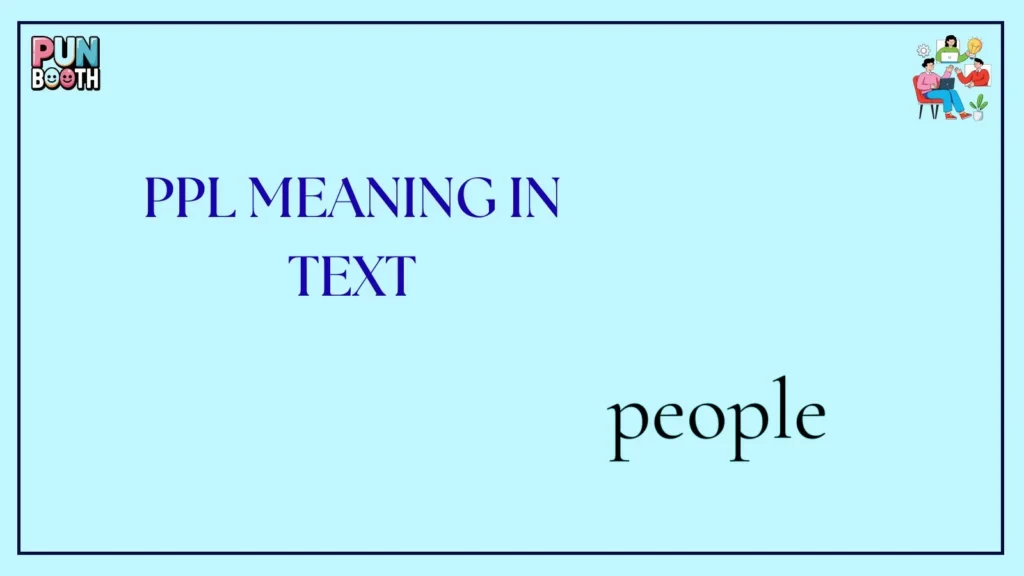
“Ppl” is a short form of the word “people.” It is commonly used in text messages, social media, and informal online communication to save time and effort while typing.
For example:
- “Some ppl just don’t understand.”
- “I met new ppl at the event.”
In both cases, “ppl” simply replaces “people” without changing the overall meaning of the sentence. It’s a straightforward abbreviation that makes typing faster, especially on mobile devices.
The tone of “ppl” is usually casual and informal. It’s not meant for serious writing or formal communication. Instead, it fits naturally in friendly conversations, comments, and quick replies.
Another important aspect is that “ppl” doesn’t carry emotional tone by itself—it depends on the sentence. For instance:
- “Good ppl still exist” (positive tone)
- “Some ppl are annoying” (negative tone)
So, while the abbreviation is simple, its meaning can slightly shift based on how it’s used.
Background & History
The abbreviation “ppl” emerged alongside the rise of SMS texting and early internet chat platforms. Back when character limits were strict—especially in older mobile messaging systems—users began shortening words to communicate more efficiently.
During the early 2000s, chat rooms, instant messaging apps, and texting culture popularized abbreviations like “u” (you), “r” (are), and “ppl” (people). These shortcuts became part of everyday digital language.
As social media platforms like Facebook, Twitter, and Instagram grew, the use of abbreviations expanded even further. “Ppl” became a widely accepted informal shorthand, especially among younger users and digital communities.
Interestingly, while technology has evolved and typing is now easier, these abbreviations have stayed relevant. They are no longer just about saving space—they also reflect a casual, modern communication style.
Today, “ppl” is recognized globally and used across different platforms, making it a standard part of internet slang.
Usage in Various Contexts
“Ppl” can be used in multiple situations, mostly in informal communication. Here are some common contexts:
1. Text Messages
In everyday texting, “ppl” helps speed up conversations.
Example: “Why are ppl so rude sometimes?”
2. Social Media Posts
It’s often used in captions or comments to express opinions.
Example: “Some ppl just love drama.”
3. Group Chats
When referring to multiple individuals quickly, “ppl” is convenient.
Example: “Are ppl coming tonight?”
4. Online Forums
Users use it while sharing general thoughts or experiences.
Example: “Ppl don’t realize how important this is.”
5. Casual Emails (Sometimes)
In very informal settings, it may appear in emails, though this is less common.
The key point is that “ppl” is best suited for relaxed, friendly communication. Using it in formal writing can make your message seem unprofessional.
Common Misconceptions & Clarifications
One common misconception is that “ppl” has multiple meanings. In reality, it almost always means “people.” Unlike some slang terms, it doesn’t have hidden or complex interpretations.
Another misunderstanding is that it’s acceptable in all types of writing. This is not true. While it’s fine in casual settings, it should be avoided in academic, business, or formal communication.
Some users also assume that using abbreviations like “ppl” makes them appear modern or trendy. While this can be true in casual chats, overusing abbreviations can sometimes make messages unclear or less polished.
Lastly, some people confuse “ppl” with similar-looking abbreviations, but its meaning remains consistent across most platforms.
Similar Terms & Alternatives
Although “ppl” is popular, there are other ways to express the same idea:
- People – The full, formal version
- Folks – Friendly and slightly informal
- Everyone – More inclusive tone
- Individuals – Formal and precise
- Guys – Casual but less inclusive in some contexts
Each alternative has its own tone and suitability depending on the situation. For example, “folks” sounds warmer, while “individuals” is more professional.
Choosing the right word depends on your audience and the tone you want to convey.
How to Respond to This Term
When someone uses “ppl” in a message, you don’t need to respond in any special way. You can reply naturally, either using the abbreviation or the full word.
Casual Response Examples:
- “Yeah, some ppl are like that.”
- “I agree, ppl can be confusing.”
More Polished Response:
- “Yes, people often think that way.”
If you’re unsure about tone, it’s safer to use the full word “people,” especially in mixed or semi-formal conversations.
Regional or Cultural Differences
“Ppl” is widely understood across English-speaking regions, including the US, UK, Canada, and beyond. It has become part of global internet culture.
However, its usage may vary slightly depending on age and digital habits. Younger users tend to use abbreviations more frequently, while older users may prefer full words.
In professional cultures, especially in formal industries, abbreviations like “ppl” are generally avoided regardless of region.
Comparison with Similar Terms
“Ppl” is often compared with other internet abbreviations:
- “Pls” – Means “please”
- “Peeps” – Slang for people, more playful
- “Fam” – Refers to close friends or group
While all these terms relate to people in some way, “ppl” is the most neutral and widely applicable.
Usage in Online Communities & Dating Apps
In online communities and dating apps, “ppl” is frequently used to express general opinions or observations.
Examples:
- “Why do ppl ghost so much?”
- “Looking to meet new ppl.”
It helps keep messages short and conversational, which is ideal for platforms where quick interaction is key.
Hidden or Offensive Meanings
“Ppl” itself does not have any offensive or hidden meaning. It is a neutral abbreviation.
However, the sentence it is used in can carry positive, negative, or even offensive tone. For example:
- “Some ppl are stupid” – offensive
- “Kind ppl are rare” – positive
So, the impact depends entirely on context, not the abbreviation itself.
Suitability for Professional Communication
In professional settings, using “ppl” is generally not recommended. It may appear too casual or unpolished.
Instead, use:
- “People” in emails
- “Individuals” in formal reports
Maintaining a professional tone helps build credibility and clarity in communication.
FAQs:
What does ppl mean in text?
It means “people” and is used as a short form in casual communication.
Is ppl formal or informal?
It is informal and best used in texting or social media.
Can I use ppl in professional emails?
No, it’s better to use the full word “people.”
Is ppl used worldwide?
Yes, it’s widely understood in global online communication.
Does ppl have multiple meanings?
No, it usually only means “people.”
Why do people use ppl instead of people?
To save time and make typing quicker.
Conclusion:
Ppl is a simple yet widely used abbreviation that represents “people” in informal digital communication.
While it’s convenient and easy to use, understanding its context is essential. It works best in casual conversations, social media, and texting, but should be avoided in professional or formal settings.
By knowing when and how to use “ppl,” you can communicate more effectively and adapt your tone based on your audience.
Whether you’re chatting with friends or posting online, this small abbreviation plays a big role in modern communication.

Hi! I’m Ethan Walker, the creator behind PunBooth, a place where words come to life and meanings finally make sense.
I’ve always been fascinated by how language keeps evolving, especially in the digital world. From trending slang to mysterious text abbreviations, I enjoy breaking things down into simple, clear explanations that anyone can understand. That curiosity is what inspired me to create PunBooth, a space where confusion turns into clarity.