In today’s fast-paced digital world, texting shortcuts and slang have become a universal language. One such commonly used abbreviation is “DK”, which often leaves people wondering what it actually means.
Whether you’re scrolling through social media, chatting with friends, or browsing online forums, you’ve probably come across this term multiple times.
People search for “DK meaning in text” because its meaning can vary depending on the context, tone, and platform. It’s short, simple, and widely used but not always clear.
Misunderstanding it can lead to confusion in conversations, especially if you’re new to texting slang.
Definition & Meaning
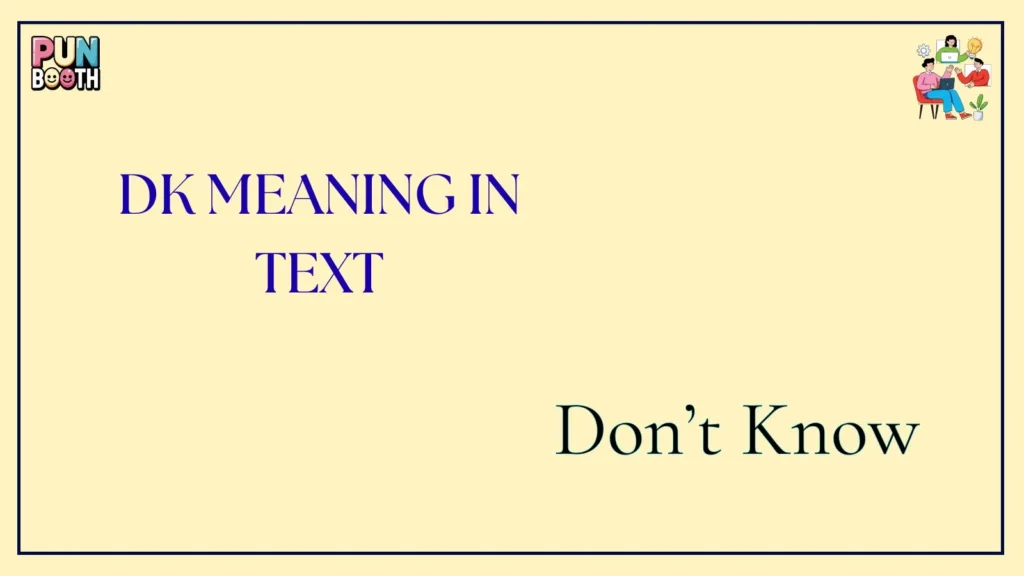
“DK” most commonly stands for “Don’t Know.” It’s a quick and informal way of expressing uncertainty or lack of knowledge in a conversation. Instead of typing out the full phrase, users prefer “DK” because it saves time and effort—especially in fast chats.
For example:
- “Where is he?”
- “DK.”
In this case, the response simply means, “I don’t know.”
However, context matters. While “Don’t Know” is the most widely accepted meaning, “DK” can sometimes carry different interpretations depending on the conversation. For instance, it may be used casually to avoid giving a detailed answer or even to show indifference.
It’s important to read the tone of the message. If someone replies with just “DK,” it might feel a bit blunt or dismissive. On the other hand, when used among friends, it’s usually harmless and conversational.
Overall, “DK” is a flexible abbreviation that reflects modern texting habits—short, quick, and efficient.
Background & History
The rise of abbreviations like “DK” can be traced back to the early days of SMS messaging and internet chat rooms. When mobile phones had character limits and typing was slower, users began shortening common phrases to communicate faster.
“Don’t Know” was naturally shortened to “DK,” following the same pattern as other abbreviations like “IDK” (I Don’t Know) and “BRB” (Be Right Back). Over time, as smartphones and social media platforms like WhatsApp, Twitter, and Instagram became popular, these abbreviations spread globally.
Interestingly, “DK” is less expressive than “IDK.” While “IDK” clearly indicates a personal response (“I don’t know”), “DK” can feel more neutral or detached. This subtle difference has influenced how people use it in different contexts.
The abbreviation has remained relevant because it fits perfectly into modern communication trends—quick replies, minimal effort, and instant messaging.
Usage in Various Contexts
“DK” can appear in many types of conversations, each giving it a slightly different tone.
1. Casual Conversations:
Among friends, “DK” is commonly used to answer questions quickly. It’s informal and widely accepted.
2. Social Media:
On platforms like Instagram or Snapchat, users often use “DK” in comments or replies to keep things brief.
3. Group Chats:
In group discussions, “DK” might indicate that someone isn’t contributing much information or is unsure about the topic.
4. Gaming & Online Communities:
Gamers often use “DK” when they’re unsure about strategies, locations, or outcomes.
5. Professional Settings:
Here, “DK” is less appropriate. Using full phrases like “I’m not sure” or “I don’t know” is more professional and polite.
The meaning remains the same, but the tone can shift depending on where and how it’s used.
Common Misconceptions & Clarifications
One major misconception is that “DK” always means the same thing. While “Don’t Know” is the standard meaning, context can change interpretation.
Some people confuse “DK” with:
- “IDK” (which is more common and clearer)
- Random initials that may have different meanings in specific communities
Another misunderstanding is assuming that “DK” is rude. In reality, it’s not inherently rude—it just depends on tone and context. A one-word reply can sometimes feel abrupt, especially in serious conversations.
Also, beginners may think “DK” is outdated. While it’s not as popular as “IDK,” it’s still used regularly, especially in fast typing environments.
Understanding these nuances helps avoid confusion and improves communication.
Similar Terms & Alternatives
There are several alternatives to “DK,” each with slightly different tones:
- IDK – More personal (“I don’t know”)
- Dunno – Casual and conversational
- Not sure – Slightly more polite
- No idea – Informal but expressive
- Unsure – More formal
Each variation depends on how formal or casual you want to sound. For example, “IDK” is more commonly used in texting, while “Not sure” works better in semi-formal chats.
Choosing the right alternative helps match the tone of the conversation.
How to Respond to This Term
When someone replies with “DK,” your response depends on the situation.
1. Ask for Clarification:
If the answer isn’t helpful, you can follow up with another question.
2. Move the Conversation Forward:
If “DK” doesn’t provide value, suggest alternatives or solutions.
3. Accept It and Continue:
Sometimes, “DK” is enough, and you can simply change the topic.
4. Add Humor:
In casual chats, you can respond playfully to keep the conversation engaging.
Understanding how to react ensures smoother communication and avoids awkward pauses.
Regional or Cultural Differences
The use of “DK” is mostly universal in English-speaking digital spaces, but its popularity can vary.
In some regions, people prefer “IDK” over “DK” because it feels clearer and more natural. In others, “DK” might be less common or even unfamiliar.
Cultural tone also matters. In formal cultures, short replies like “DK” might be seen as impolite, while in casual environments, they’re perfectly acceptable.
Language evolution and regional preferences continue to shape how abbreviations like “DK” are used.
Comparison with Similar Terms
Comparing “DK” with similar abbreviations helps highlight its uniqueness:
- DK vs IDK:
IDK is more widely used and clearer. - DK vs Dunno:
“Dunno” feels more conversational and friendly. - DK vs No Idea:
“No idea” is more expressive and less abrupt.
“DK” stands out for its simplicity but may lack emotional tone compared to alternatives.
Usage in Online Communities & Dating Apps
In online communities and dating apps, communication style matters a lot. Using “DK” in these spaces can sometimes come across as low effort.
For example:
- In dating apps, replying “DK” might seem uninterested.
- In forums, it may signal lack of knowledge without adding value.
However, in casual chats, it’s still acceptable. The key is understanding the expectations of the platform and audience.
Hidden or Offensive Meanings
Generally, “DK” is harmless. However, like many abbreviations, it can take on different meanings in niche communities.
In rare cases, it might be used sarcastically or dismissively, which can feel rude depending on tone. But it does not have any widely recognized offensive meaning.
Still, it’s always important to consider context before interpreting or using it.
Suitability for Professional Communication
“DK” is not suitable for professional or formal communication. In emails, meetings, or workplace chats, using full phrases is more appropriate.
Instead of “DK,” consider:
- “I’m not sure at the moment.”
- “I’ll need to check.”
Using proper language shows professionalism and respect, which is essential in formal environments.
FAQs:
What does DK mean in text?
It usually means “Don’t Know.”
Is DK the same as IDK?
Not exactly—IDK is more personal and commonly used.
Is DK rude in texting?
Not necessarily, but it can feel blunt depending on context.
Can DK have other meanings?
Yes, but “Don’t Know” is the most common.
Should I use DK in professional chats?
No, it’s better to use full sentences.
Why do people use DK instead of IDK?
Mainly for speed and simplicity.
Conclusion:
“DK” is a simple yet widely used texting abbreviation that stands for “Don’t Know.” While it may seem straightforward, its tone and interpretation depend heavily on context, platform, and audience.
Understanding when and how to use “DK” can help you communicate more effectively and avoid misunderstandings.
Whether you’re texting friends or navigating online communities, knowing the nuances of this term ensures smoother, clearer conversations.

Hi, I’m Leo Anderson, the creator behind PunBooth, a space dedicated to exploring meanings, slang, text abbreviations, and the ever-evolving language of the internet.
At PunBooth, my goal is simple: to make complex words, confusing slang, and trending phrases easy to understand for everyone. Whether it’s a viral text abbreviation, a hood slang term, or a word you’ve seen online but didn’t quite get, I break it down into clear, simple, and human-friendly explanations.